Guide
Robot mower blades: types, when to change, cost
Most robot mowers cut with small pivoting razor blades on a spinning disc; a few use fixed blades. How the types differ, how often to change them, what replacement packs cost from the manufacturers, and how to fit them safely.

Robot mower blades are small, cheap and changed often. That's by design: a robot mower cuts a few millimetres of grass at a time, every day or two, so it needs a sharp edge rather than a heavy one. Knowing what type your mower uses, how to tell when the blades are worn and roughly what replacements cost helps you budget for running costs and keeps the lawn looking good.
How a robot mower cuts
Almost every robot mower has one or two cutting discs underneath, spinning horizontally. The blades are fixed near the edge of the disc. Because the blades sit inside the mower's body, there's usually an uncut strip at the lawn edge; see edge cutting.
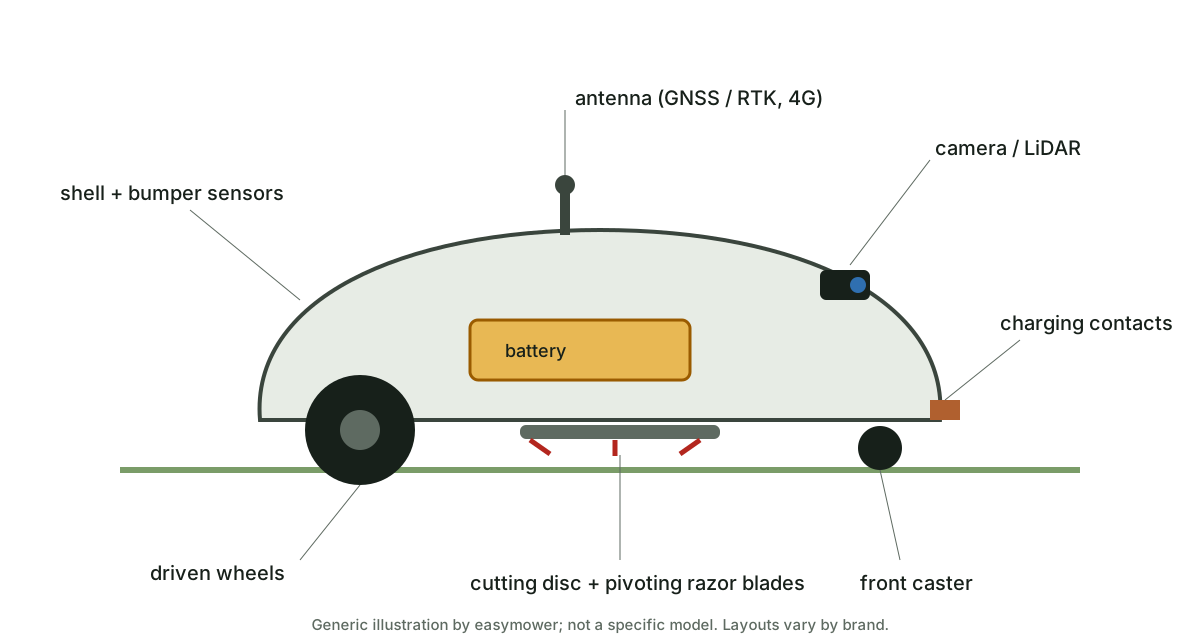
The clippings are tiny and fall back into the lawn as mulch. There's no grass box to empty. This only works if the mower runs often enough that it never has to cut more than a small amount at once, and if the blades are sharp enough to slice cleanly.
Blade types
Pivoting razor blades
The most common design. Each blade is a thin, double-edged strip of steel, about the size of a razor blade, held on the disc by a single screw so it can swing. Centrifugal force holds it out while the disc spins; if it hits a stone, root or toy, it folds back rather than breaking or throwing the mower off course. Researchers studying hedgehog injuries also found pivoting blades were associated with less harm than rigid designs (see our hedgehogs and wildlife guide).
Most brands use this system, with differences in the number of blades and discs:
- Husqvarna's Automower 310E NERA uses 2 discs with 3 pivoting razor blades.
- STIGA's A v range uses 4 pivoting razor blades on disc.
- Mammotion's LUBA 3 AWD uses 2 discs, 6 pivoting razor blades per disc.
- Segway Navimow's X4 uses 2 discs, 12 blades, floating deck, anti-clog.
More blades on a disc don't necessarily mean a better cut, but they share the wear, and two discs give a wider cut on bigger machines. Many pivoting blades are double-edged, and some manufacturers describe their blades as reversible (Parkside lists 3 reversible double-edged blades for its robot mower, for example). Check your manual before turning a blade over: not all are designed for it, and the direction of spin matters.
Fixed blades
A few mowers use a single rigid blade, like a small version of the blade on a walk-behind rotary mower. Ambrogio lists 4-tip cutter disc / 4-point solid stainless steel blade across its Twenty range, for example. Fixed blades are thicker and last longer between changes, and can often be sharpened, but they're heavier and don't fold away from obstacles. The motor also has to work harder to spin them.
Other designs
Some mowers take a different approach. Lymow's One Plus uses two rotary mulching blades, and Yarbo offers optional straight blades for its Lawn Mower Pro alongside the standard razor-blade discs. These are designed for longer or rougher grass. Whatever the design, replace like with like unless the manufacturer lists an alternative.
When to change the blades
Manufacturers give intervals, but the lawn is the best guide. Signs the blades are worn:
- Torn, whitish or brown grass tips a day or two after mowing. A sharp blade slices; a dull one tears.
- Visible nicks, bends or rounded edges on the blades.
- More noise or vibration than usual.
- Shorter mowing sessions or more battery use, as the motor works harder.
Husqvarna's UK support page on how and when to change Automower blades suggests replacing its standard blades every 6–8 weeks and its longer-lasting Endurance blades every 3–4 months, and says blade life varies with lawn size, grass type and how long the mower runs. Other brands give similar ranges. On a UK season running from about March to October, that means somewhere between two and five sets a year for most gardens.
Things that wear blades faster:
- A large lawn relative to the mower's rated area, so it runs for more hours.
- Sandy or stony soil, twigs, pine cones, fallen fruit and molehills.
- Mowing close to paving, gravel or edging stones.
What replacement blades cost
Blades are one of the cheapest parts of running a robot mower. Manufacturer prices for packs listed in our database, at the time of writing (September 2026):
| Pack | Manufacturer RRP | Fits (examples) | |---|---|---| | Husqvarna Classic Blades | £20.99 | Most current Automower models | | Husqvarna Endurance Blades (smallest pack) | £25.99 | Most current Automower models | | Mammotion Endurance Replacement Blades, 24 pieces | £55 | LUBA and YUKA ranges | | STIGA razor kit, 12 blades | £37.24 | A-series and A v range | | Segway Navimow Blade Assembly Plus | £25 | X4, i-series, i2 and H ranges | | Worx 12 replacement blades | £19.99 | Landroid M and older Landroid models | | eufy replacement blade set, 3 × 9 blades | £29.99 | E15, E18 and C15 | | TerraMow razor blade set, 15 pieces | £14.99 | V series and Mini 500 |
Prices change and retailers often sell for less; the pack sizes differ, so compare the cost per change rather than per pack. For most owners, blades add a modest amount to the yearly running cost. Our running-costs calculator includes blades, and the blades accessories page lists compatible packs by model.
How to change pivoting blades
The details vary, so follow your manual, but the process is usually:
- Switch the mower off completely and activate any safety lock or stop button. Wear protective gloves.
- Turn the mower over onto a soft surface, such as grass or an old towel, so the body isn't scratched.
- Clean the disc with a brush so you can see the screws.
- Remove each blade and screw with a screwdriver. Many brands say to fit a new screw every time, because the screw is also a wear part and holds the blade in place at high speed. Most blade packs include screws.
- Fit the new blades so they swing freely, and tighten the screws firmly.
- Check the disc turns smoothly and that every blade pivots.
Replace all the blades at once, not just the worst one, so the disc stays balanced.
Getting the best cut
- Mow little and often. A robot mower's cut is best when it's never removing more than a few millimetres.
- Adjust height gradually. Lower the cutting height in steps over a couple of weeks rather than all at once.
- Clear the lawn of stones, sticks and fruit before the season and after storms.
- Keep the disc clean. A build-up of wet grass under the disc makes the motor work harder and wears blades faster.
- Keep spares. A pack in the shed means you can change blades as soon as the lawn tells you to.
Blades are excluded from almost every manufacturer's warranty as wear parts, so factor them in as a running cost. For more on what a robot mower costs over its life, see how much a robot mower costs to buy and run.
Frequently asked questions
How often should I change robot mower blades?
Every few weeks to a few months in the growing season, depending on the blade type, lawn size and how much the mower runs. Husqvarna, for example, suggests every 6–8 weeks for its standard blades and every 3–4 months for its Endurance blades. Change them sooner if the grass tips look torn or white after mowing.
Can I sharpen robot mower blades?
It isn't usually worth it. Pivoting razor blades are thin, cheap and designed to be replaced. Sharpening can unbalance them and cause vibration. Heavier fixed blades on some mowers can be sharpened; check the manual.
Can I use non-original blades?
Third-party blades are widely sold and often fit, but thickness, weight and hole position vary. Manufacturers recommend their own blades and screws, and using others could affect a warranty claim if something goes wrong. Always replace the screws when you change blades.
Why are the blades loose on my robot mower?
On most robot mowers they're meant to be. Pivoting blades swing freely on their screws so they can fold back if they hit something hard. As long as the screw is tight and the blade swings smoothly, it's working as designed.
Are blades covered by the warranty?
Usually not. Blades are wear parts, and most manufacturers exclude them, along with cutting discs and tyres, from the standard warranty.
In this guide
Models mentioned in this guide
With today’s lowest UK price and our score.

Husqvarna Automower 310E NERA
- Up to 1,500 m²
- Network RTK
- 30% slopes
 Mammotion
Mammotion LUBA 3 AWD
- Up to 5,000 m²
- Hybrid (RTK + vision/LiDAR)
- 80% slopes

Segway Navimow X4 Series
- Up to 5,000 m²
- Hybrid (RTK + vision/LiDAR)
- 84% slopes

STIGA A v range (A 6v to A 25v)
- Up to 2,500 m²
- Network RTK
- 45% slopes

Ambrogio Twenty
- Up to 3,500 m²
- Perimeter wire
- 45% slopes

Worx Landroid M
- Up to 500 m²
- Perimeter wire
- 35% slopes
Mower finder
Not sure which mower fits your garden?
Tell us your lawn size, slopes, trees and budget. The finder filters every current model down to the ones that fit, and explains why.
Measure your lawn on a map