Guide
Winter storage and maintenance
When to stop mowing in autumn, how to clean and store a robot mower and its battery over a UK winter, what to do with the charging station, wire and RTK antenna, and a simple maintenance routine for the rest of the year.

A robot mower is designed to live outdoors during the mowing season, but most manufacturers want it indoors for the winter. A little care in autumn makes a real difference to how long the battery lasts and how well the mower starts again in spring. This guide covers the end-of-season routine, storage, spring restart and the small jobs that keep a mower running well all year.
Always follow your own manual where it differs: battery chemistry, charging stations and sealing vary between brands.
When to stop mowing
Grass growth slows sharply once soil temperatures drop, which in much of the UK happens between late October and November, earlier in the north and in frost pockets. There's little point running a mower on grass that isn't growing, and it can do harm:
- Frost. Driving on frozen grass bruises the blades of grass and leaves dark tracks. Some mowers have a frost or temperature sensor and won't start in the cold; Gardena lists a frost sensor on its wired SILENO models, for example. Others need you to adjust the schedule.
- Waterlogged lawns. Wet, soft ground makes wheels slip and leaves ruts, especially on slopes and along the mower's regular route back to the charging station.
- Leaves. A robot mower can mulch a light scattering of leaves, but a thick layer blocks sensors, clogs the cutting disc and smothers the grass. Rake heavy leaf fall before mowing.
A sensible approach is to reduce the schedule through October, raise the cutting height slightly for the last few cuts, and stop when growth stops.
End-of-season checklist
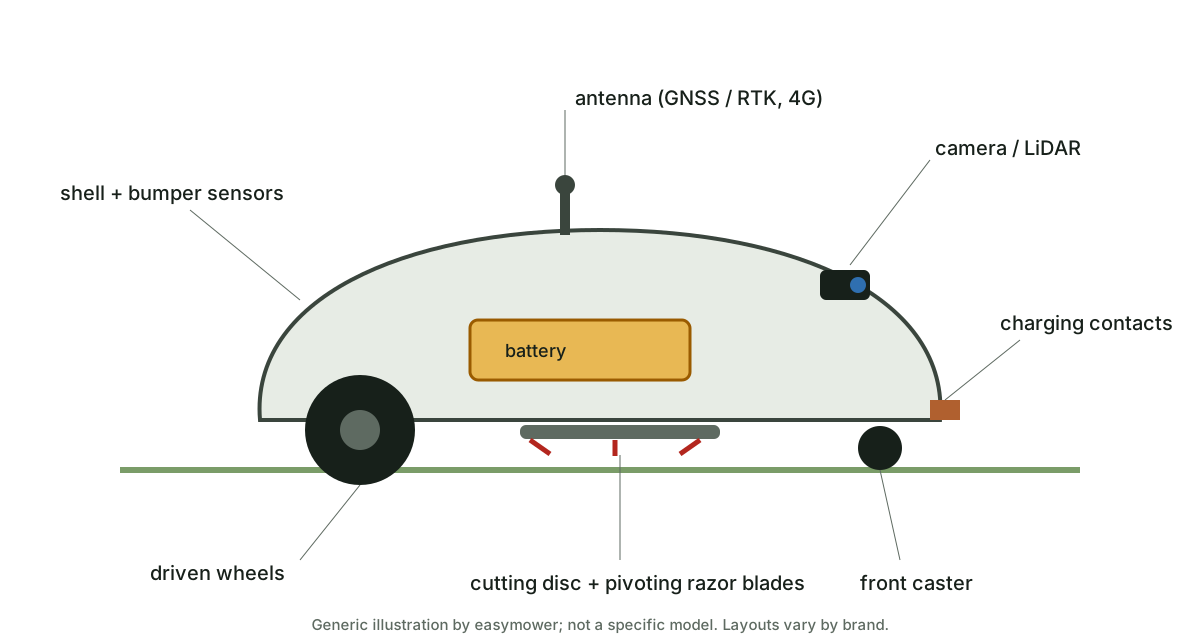
- Switch off scheduling in the app so the mower doesn't try to start while stored.
- Clean the mower. Turn it off first, and wear gloves near the blades. Brush dried grass from the underside, the cutting disc, the wheels and the charging contacts. Wipe the body and sensors with a damp cloth. Don't use a pressure washer. Whether you can use a hose depends on the IP rating: for example, Segway Navimow rates the i2 LiDAR at IP66 and Flymo rates its EasiLife mowers at IPX5, but a gentle rinse is still the most any manual generally allows, and some advise against water on the underside at all.
- Check the blades and disc. Look for chips, bends and wear. Husqvarna suggests fitting new blades and screws before storage so the mower starts next season with a sharp cut; you can equally do it in spring. See our blade guide.
- Inspect wheels and tyres. Clear packed mud, check for wear and spin the wheels to listen for rough bearings.
- Charge the battery as the manual says, then switch the mower off completely. Husqvarna says to charge fully; check your own brand's advice.
- Update the firmware while the mower is still connected, so it's ready in spring.
Where and how to store the mower
Husqvarna's winter storage guide recommends a dry, frost-free place above 0°C for the mower, charging station and power supply, with the mower resting on its wheels on a flat surface or on a wall hanger. That's typical of manufacturers' advice. In practice:
- A garage, utility room or insulated shed is ideal. An unheated metal shed can get very cold and damp; if that's all you have, raise the mower off the floor and cover it loosely with something breathable.
- Keep it out of reach of rodents, which can chew wiring.
- Don't stack things on top. Bumper sensors and body shells are designed to move.
- Avoid airtight bags that trap condensation. A loose dust cover is fine.
The battery
Lithium-ion batteries age faster when stored hot, when stored completely flat, and when charged below freezing. Winter storage indoors avoids the last of these. If the mower is off for several months, some manuals suggest checking the charge partway through and topping up if needed. Never charge a battery that has been stored below freezing until it has warmed up to room temperature.
The charging station, wire and RTK antenna
- Charging station. Most manufacturers recommend bringing it indoors too. Unplug it, clean the contacts and store it with the power supply. Husqvarna says the baseplate of its NERA charging stations can stay outside, with only the top part brought in.
- Perimeter and guide wire. Leave buried or pegged wire where it is. If you disconnect it, cover the ends so water doesn't get into the connectors, and label them. If you leave the station outside and connected, keep it powered, as Husqvarna suggests, so the wire signal stays active.
- RTK base station or antenna. Many are designed to stay outdoors all year; Husqvarna says this of its EPOS reference station. Check the manual for your brand, and make sure the mounting is secure before winter winds.
- 4G subscriptions. If you pay monthly for data, check whether you can pause it over the winter.
Getting going again in spring
When the grass starts to grow steadily again, usually from March or April:
- Walk the lawn and pick up stones, sticks and anything winter has left behind. Check for molehills.
- For a wired mower, walk the perimeter wire, reconnect it and check the charging station shows a good loop signal. Wire breaks are more common after winter.
- For a wire-free mower, check that the map still matches the garden. New beds, a moved shed or fallen trees may need the boundary or no-go zones updating, and bare winter trees may temporarily improve RTK signal compared with summer.
- Charge the mower indoors at room temperature, then put it back on its station.
- Start with a higher cutting height if the grass is long, and lower it gradually over a few weeks.
- Set a schedule that suits spring growth; you can increase it as the season picks up.
If you have a slope, wait until the ground has dried out a bit. Wet spring grass is when mowers struggle most on gradients (see robot mowers on slopes).
Maintenance during the season
Robot mowers need far less attention than a petrol mower, but not none. A light routine:
- Weekly: glance at the underside and clear any build-up of grass, especially after wet weather.
- Monthly: clean the charging contacts and sensors, check the blades, and look for firmware updates.
- Every few weeks to months: change the blades. Intervals vary by blade type and lawn; see our blade guide.
- After storms: check the wire and charging station, and that the RTK antenna hasn't been knocked out of position.
Some brands offer a dealer winter service. Husqvarna, for example, says its service plans may include winter maintenance and storage through a dealer. Brands sold direct online tend to leave maintenance to the owner. It's worth knowing which kind you're buying before you choose a mower, and the warranty notes on each model page show what each manufacturer requires.
Frequently asked questions
Can I leave my robot mower outside over winter?
Most manufacturers advise against it. Husqvarna, for example, recommends storing the mower, charging station and power supply somewhere dry and above freezing. Lithium-ion batteries don't like being charged in the cold, and damp, dirty storage shortens a mower's life.
When should I stop using my robot mower for winter?
When the grass stops growing, which in much of the UK is around late October to November, or earlier after the first frosts. Don't mow frozen or waterlogged grass. Many mowers can be left on a reduced schedule into late autumn and put away when growth stops.
Should I charge the battery before winter storage?
Follow your manual. Husqvarna says to charge the mower fully and switch it off before storage. Some other manufacturers suggest a partial charge. Either way, switch it off so the battery doesn't slowly drain, and check it once or twice over the winter if the manual suggests it.
Do I need to take up the perimeter wire in winter?
No. Buried or pegged wire stays in place. Disconnect it from the charging station if you bring the station indoors, protect the connectors from damp, and label them so you reconnect them the right way in spring.
Can I jet wash my robot mower?
No. Manufacturers warn against pressure washers, which can force water past seals and into electronics. Use a brush and a damp cloth; some mowers with a high IP rating can be rinsed gently with a garden hose, but check the manual first.
In this guide
Models mentioned in this guide
With today’s lowest UK price and our score.

Husqvarna Automower 310E NERA
- Up to 1,500 m²
- Network RTK
- 30% slopes

GARDENA SILENO city
- Up to 500 m²
- Perimeter wire
- 35% slopes
 Mammotion
Mammotion LUBA 3 AWD
- Up to 5,000 m²
- Hybrid (RTK + vision/LiDAR)
- 80% slopes

Worx Landroid M
- Up to 500 m²
- Perimeter wire
- 35% slopes

Segway Navimow i2 LiDAR
- Up to 2,000 m²
- LiDAR
- 45% slopes
Mower finder
Not sure which mower fits your garden?
Tell us your lawn size, slopes, trees and budget. The finder filters every current model down to the ones that fit, and explains why.
Measure your lawn on a map