Guide
Robot mower vs cordless mower: which is right for you?
A robot mower saves you time every week but costs more and needs setting up; a cordless push mower is cheaper, simpler and handles rough grass. How they compare on cost, time, cut quality, lawn size, slopes, noise and upkeep, and who each one suits.

Short answer: a robot mower is right if your lawn is big enough that mowing takes real time each week, you want it to look tidy all season, and you're willing to spend more up front and set it up properly. A cordless mower is right if your lawn is small, you don't mind mowing, you want the lowest cost, or your grass is often long and rough.
This isn't really an either/or for many people. Plenty of robot mower owners keep a small cordless mower or a strimmer for edges and the first cut of spring. The question is which one does the weekly work.
How they compare at a glance
| | Robot mower | Cordless push mower | |---|---|---| | Your time | Almost none once set up | Every cut, every week in summer | | Purchase price | Higher, often much higher | Lower | | Setup | Mapping in an app, or laying a wire | None | | Cut style | A little, very often; clippings mulched | Longer growth between cuts; clippings usually collected | | Long or rough grass | Poor | Good | | Edges | Usually leaves a strip | Close, with care | | Slopes | Depends on model rating | Depends on you | | Noise | Quiet, but runs for hours | Louder, but for a short time | | Storage | Lives on the lawn in season | Shed or garage |
Time
This is the whole point of a robot mower. Once it's installed and the schedule is set, a robot mower keeps the lawn cut without you. You'll clear the underside occasionally, change blades every few weeks to months, pick up toys and sticks, and keep an eye on the app.
With a cordless mower, you do the work: getting it out, charging batteries, mowing, emptying the grass box and cleaning up. On a small lawn that might be a short job; on a big one it can take a good part of a weekend morning, every week from spring to autumn. Put an honest number on that time before you decide.
Cost
A cordless mower is the cheaper purchase by a wide margin, especially if you already own batteries from the same tool range. A robot mower costs more, and the wire-free models that need no perimeter wire cost more again. At the budget end, wired mowers such as the Worx Landroid M start from £349.99; Flymo's EasiLife GO and Gardena's SILENO minimo are also aimed at small lawns, though neither brand publishes a UK RRP. Wire-free mowers for small lawns, such as the Mammotion YUKA mini 2, start from £799.
| Model | Price from | Max lawn | Navigation | Max slope | Score |
|---|---|---|---|---|---|
 LawnMaster OcuMow 16 LawnMaster OcuMow 16 | £229.99 | 300 m² | Vision (camera) | 35% | 5.9 |
 Bosch VISIMOW18V Bosch VISIMOW18V | £299.98 | 200 m² | Vision (camera) | 35% | 5.7 |
| LawnMaster OcuMow AMB16 | £379.99 | 600 m² | Vision (camera) | 35% | 6.8 |
 Ecovacs GOAT O RTK (O600 RTK / O800 RTK) Ecovacs GOAT O RTK (O600 RTK / O800 RTK) | £449 | 800 m² | RTK (own base station) | 45% | 7.5 |
| LawnMaster OcuMow 18 | £499.99 | 800 m² | Vision (camera) | 35% | 6.9 |
 Einhell FREELEXO CAM Einhell FREELEXO CAM | £579.95 | 500 m² | Vision (camera) | 25% | 6.4 |
Running costs are small for both: a little electricity, plus blades for the robot mower. A robot mower runs for more hours, so it uses more electricity over a season, but it's still modest. For a model-by-model estimate, use our running-costs calculator, and see how much a robot mower costs to buy and run for the full picture, including installation and accessories.
The other cost is lifespan. A good cordless mower is mechanically simple and can last many years with a battery replacement. A robot mower has more to go wrong, more software, and its battery will also need replacing eventually. Look at the warranty length, which ranges from two years to longer on many robot mowers, and whether the brand has UK support and parts.
Lawn size
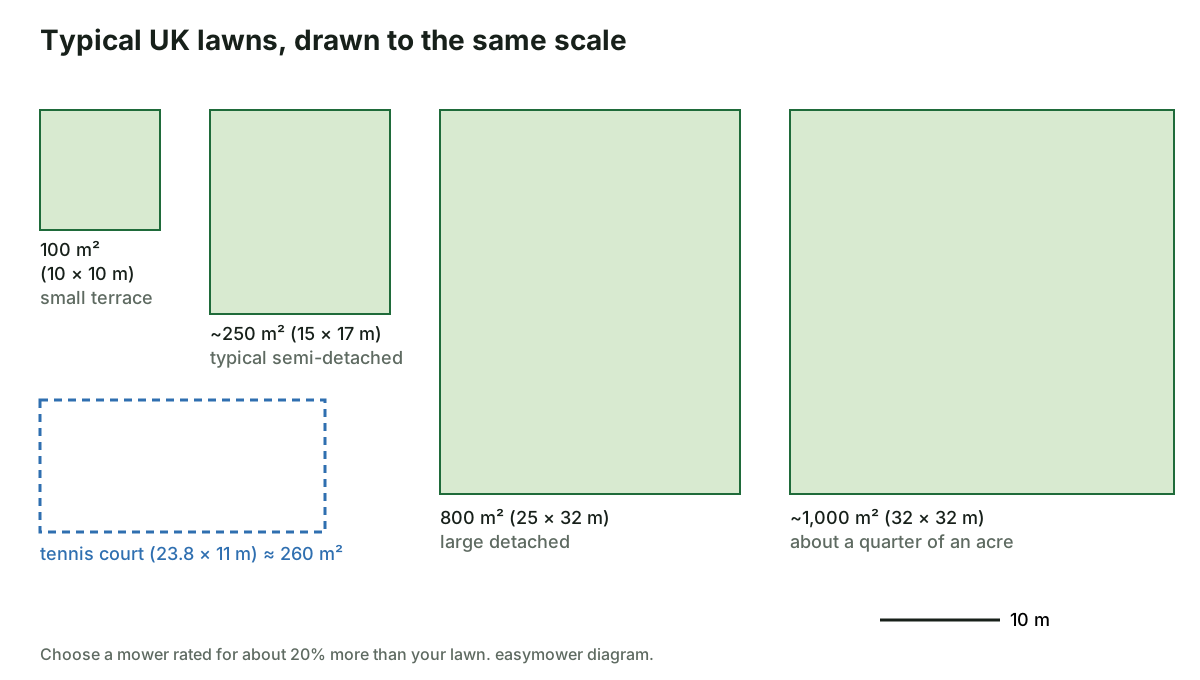
On a small lawn, the case for a robot mower is weakest: mowing takes minutes, and a cheap cordless mower does it well. Small lawns are also often the most awkward for robot mowers, with tight corners, lots of edge relative to area, and nowhere tidy for the charging station.
As lawns grow, the balance shifts. On a lawn of several hundred square metres, a cordless mower means a big weekly job and possibly two batteries, while a robot mower sized for the area handles it without fuss. On very large lawns, a cordless push mower becomes hard work, and the choice is really between a robot mower and a ride-on. Measure yours with our lawn size tool.
Cut quality
The two cut in different ways.
- Robot mowers remove a few millimetres every day or two with small, sharp blades. The lawn always looks recently cut, the fine clippings mulch into the soil, and there's nothing to collect. Many people find the lawn gets thicker over time. But most robot mowers can't make stripes, and random-pattern mowers leave no visible lines at all.
- Cordless mowers cut a larger amount less often. You get a crisp result on the day, stripes if the mower has a roller, and the option to collect clippings. Between cuts, the lawn grows.
Robot mowers also struggle with long grass. They're built to maintain a lawn, not to reclaim one. If you go on holiday for three weeks in June, a push mower copes with the result better.
Edges, slopes and awkward gardens
- Edges. Most robot mowers leave a strip along walls, fences and beds because the blades sit inside the body. Some claim full edge cutting, but you'll often still want a strimmer or shears. A cordless mower gets closer, with care.
- Slopes. Every robot mower has a maximum slope rating, and the cheapest are often rated for gentle slopes only. A cordless mower goes wherever you're comfortable pushing it, though steep banks are hard work and not always safe. See robot mowers on slopes.
- Complex gardens. Separate lawns, narrow passages and lots of beds make robot mower setup harder and cost more. See complex gardens.
Noise, safety and wildlife
Robot mowers are quiet compared with most mowers, but they run for hours, several days a week. That's usually fine for neighbours in daytime; check the published noise figure if your lawn backs onto a bedroom window.
A cordless mower is only running when someone is behind it. A robot mower works unattended, so pets, children and wildlife need thinking about. Robot mowers have lift, tilt and collision sensors and stop the blades quickly, but they can still injure small animals, especially hedgehogs at night. Run them in daylight only; our hedgehogs and wildlife guide explains why.
Setup and upkeep
A cordless mower needs no setup. A robot mower needs a charging station near a power socket, and either a perimeter wire laid round the lawn or a wire-free setup mapped in an app, sometimes with an RTK antenna or a 4G subscription. See perimeter wire vs wire-free and how to install a robot mower.
Upkeep is similar in scale: cleaning, blades, winter storage. A robot mower adds app updates and, for wired models, the occasional wire break. See winter storage and maintenance.
Who should choose which
Choose a robot mower if:
- Mowing takes a meaningful chunk of your week, or you find it a chore.
- You want the lawn to look consistently tidy all season.
- Your lawn is a reasonable size and shape, or you're prepared to pay for a model that handles a complex one.
- You can put a charging station somewhere sensible, with power.
Choose a cordless mower if:
- Your lawn is small and quick to mow.
- You want the lowest cost, or you already own compatible batteries.
- Your grass is often long, rough or left for weeks at a time.
- You want stripes, or to collect clippings.
- You'd rather not rely on an app or have a machine running unattended.
If you're leaning towards a robot mower, our guide to whether robot mowers are worth it goes into the value question in more depth, and the finder tool narrows down models for your lawn.
Frequently asked questions
Is a robot mower better than a cordless mower?
For keeping a regularly used lawn neat with no effort, usually yes. For small lawns, occasional mowing, long or rough grass, or a tight budget, a cordless mower is often the better choice. Many robot mower owners keep a small cordless or hand mower for edges and awkward corners.
Do robot mowers cut as well as normal mowers?
They cut differently. A robot mower trims a little every day or two, so the lawn always looks freshly cut and the clippings mulch in. A push mower gives a crisper one-off cut and can do stripes, but the lawn grows longer between cuts. Neither is better in every garden.
Can a robot mower cut long grass?
Not well. Robot mowers are designed to maintain grass that's already short. If the lawn is long at the start of the season, cut it down with a conventional mower first, then let the robot keep it there.
What's cheaper to run, a robot mower or a cordless mower?
Both are cheap to run on electricity. A robot mower uses more energy over a season because it runs more often, and it needs regular blade changes, but the amounts are small. The bigger difference is the purchase price. Our running-costs calculator estimates the yearly figure for a specific model.
Will I still need a strimmer with a robot mower?
Probably, for some edges. Most robot mowers leave a strip of a few centimetres along walls, fences and beds. Some models claim full edge cutting; check the spec before you buy.
In this guide
Models mentioned in this guide
With today’s lowest UK price and our score.

Flymo EasiLife GO
- Up to 500 m²
- Perimeter wire
- 25% slopes

GARDENA SILENO minimo
- Up to 500 m²
- Perimeter wire
- 25% slopes

eufy Robot Lawn Mower E15
- Up to 800 m²
- Vision (camera)
- 32.5% slopes
 Mammotion
Mammotion YUKA mini 2
- Up to 1,000 m²
- Hybrid (RTK + vision/LiDAR)
- 45% slopes

Worx Landroid M
- Up to 500 m²
- Perimeter wire
- 35% slopes
Mower finder
Not sure which mower fits your garden?
Tell us your lawn size, slopes, trees and budget. The finder filters every current model down to the ones that fit, and explains why.
Measure your lawn on a map