Guide
How do robot lawn mowers work?
A robot mower is a small battery mower that cuts a little and often, finds its own way around the lawn and goes back to its charging station when it needs power. This guide explains the parts, the four ways mowers find the lawn edge, how they deal with obstacles and weather, and what they still can't do.

The short version
A robot lawn mower is a small, battery-powered mower that runs on a schedule you set. Instead of one big cut every week or two, it trims a few millimetres off the grass most days, leaves the clippings on the lawn as a fine mulch, and drives itself back to a charging station when the battery runs low or the session ends.
To do that on its own it has to solve three problems: knowing where the lawn stops, knowing where it is on the lawn, and not driving into or over things. How a mower solves the first two is the biggest difference between models, and the main thing that decides how easy it is to install and how well it suits your garden.
The main parts
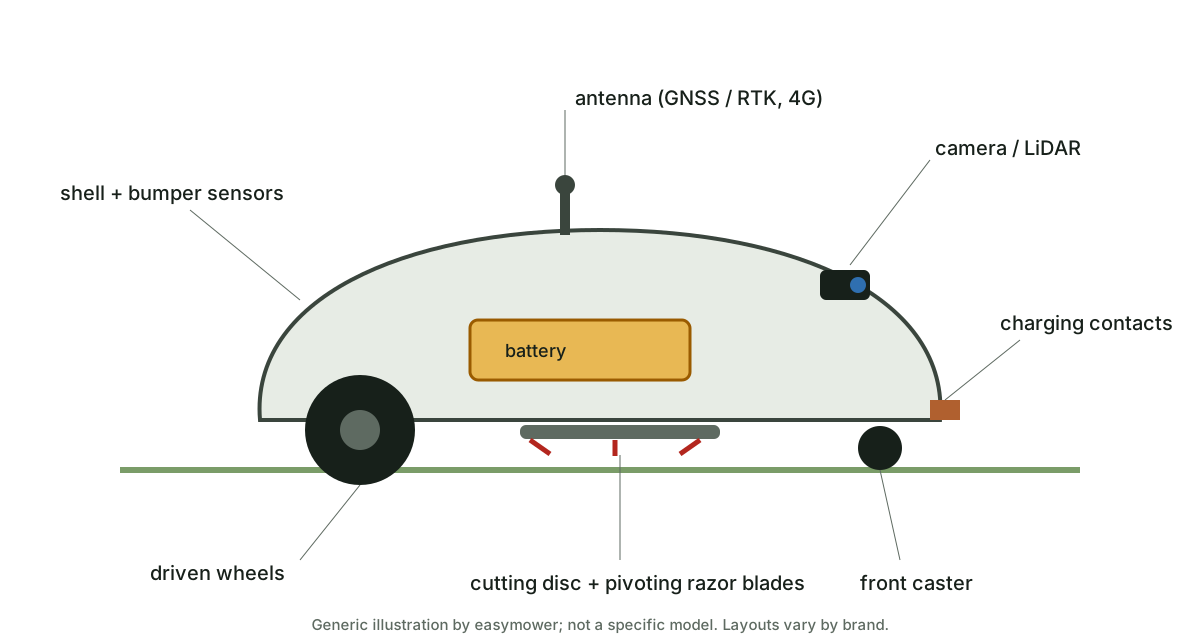
Almost every robot mower has the same basic parts:
- Cutting disc and blades. Most use a spinning disc with small pivoting razor blades, a bit like a craft knife blade on a hinge. They swing back if they hit something hard. Some use a fixed blade or a mulching disc instead. Blades are cheap consumables that need changing a few times a season; see our guide to blades.
- Drive wheels. Most mowers are two-wheel drive with a castor or free wheel at the front. Models for steep lawns use all-wheel or four-wheel drive.
- Battery. A lithium-ion pack, usually between a few dozen and a few hundred watt-hours. Bigger batteries mean more lawn per charge, not a faster cut.
- Sensors. Bump sensors in the body, lift and tilt sensors that stop the blades, and on many models a rain sensor. Newer models add cameras, ultrasonic sensors or LiDAR.
- Charging station. The mower docks on contacts to recharge. On wired mowers the station also sends the signal around the boundary wire.
- Connectivity. Bluetooth, Wi-Fi or 4G, or a mix, so you can control the mower from an app.
Cutting width varies more than you might expect. A small mower such as the Flymo EasiLife cuts a 160 mm strip, while a large-garden machine such as the Mammotion LUBA 3 AWD cuts 400 mm. Wider cuts cover big lawns in fewer passes.
Why "little and often" works
A robot mower is never trying to take a lawn from long to short. Each run removes only the tip of each grass blade, so the clippings are tiny and settle between the stems rather than sitting on top in clumps. Because it runs so often, the lawn stays at roughly the same height all season. That suits UK weather: in a wet spring, when grass can grow quickly and weekends get rained off, the robot simply keeps going between showers.
The trade-off is that you won't get the bold stripes of a roller mower, and there's nothing to empty. Robot mowers also aren't designed for rough, long or very uneven grass; the first cut should be done with an ordinary mower.
How it knows where the lawn ends
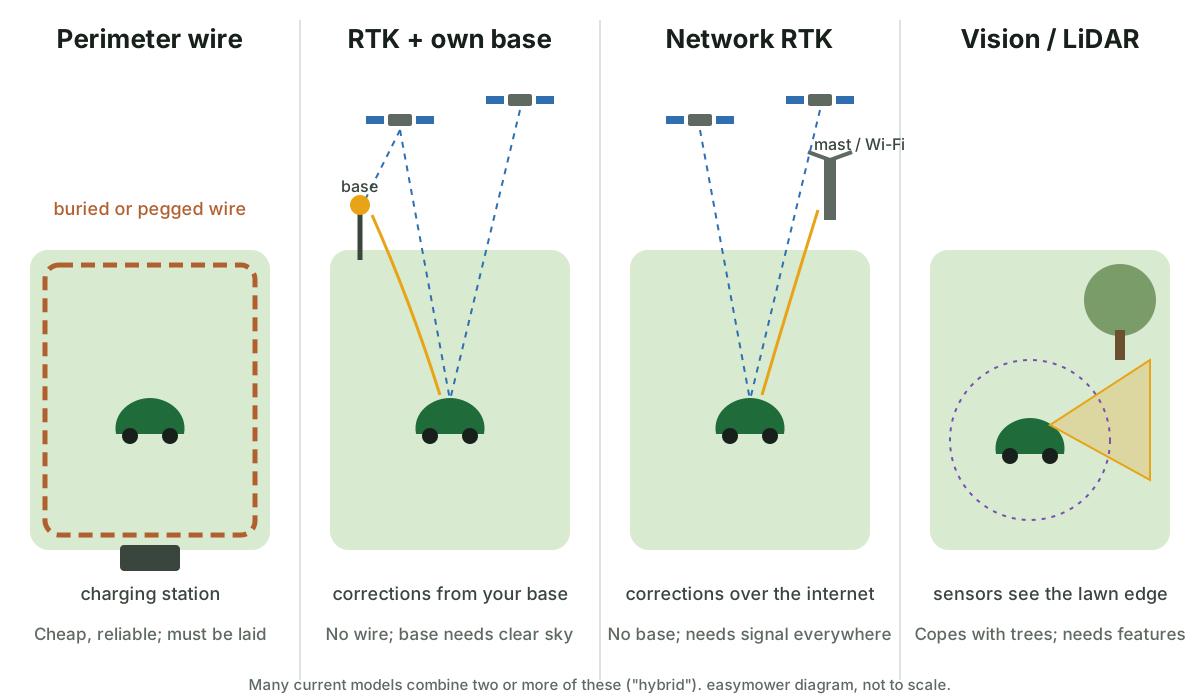
There are four main approaches, and many current mowers combine two or more.
- Perimeter wire. A thin wire is pegged down or buried around the edge of the lawn and around anything you want the mower to avoid, such as flowerbeds and ponds. The charging station sends a weak signal along the wire, and the mower turns back when it senses it. This is the oldest method and doesn't depend on satellites or mobile signal. Examples include the Flymo EasiLife and most older Husqvarna Automowers.
- RTK with its own base station. The mower uses satellite positioning, like a phone's GPS, but far more precise. A small base station in the garden, usually on a pole or a wall, sends corrections that bring accuracy down to a few centimetres. You draw the boundary by driving the mower round the edge in the app. The Ecovacs GOAT O RTK works this way.
- Network RTK. The same idea, but the corrections come over the internet (4G or Wi-Fi) from a network of reference stations, so there's no base station to fix up. The Stiga A v range is an example. See our guide to network RTK and 4G.
- Vision and LiDAR. Cameras recognise grass and the lawn edge, and LiDAR scanners measure distances to walls, fences and trees to build a map. Neither needs satellite signal. The eufy E15 relies on cameras; the Dreame A1 Pro uses LiDAR.
Each has strengths and weak spots. Satellite methods struggle under trees and beside tall buildings, cameras can be confused by poor light or lawns that blend into borders, and wire takes effort to install and can be cut. We compare them in detail in RTK vs vision vs LiDAR and perimeter wire vs wire-free.
How it moves around the lawn
Mowers cover the lawn in one of two ways:
- Random mowing. Common on wired mowers. The mower drives in a straight line until it reaches the wire or an obstacle, turns to a new angle and carries on. It looks haphazard, but over several days every part of the lawn gets cut many times.
- Systematic mowing. Most wire-free mowers know exactly where they are, so they mow in neat parallel lines, like a person would, and can finish a lawn in fewer hours. Many let you change the angle of the lines between sessions to avoid ruts.
Some wired mowers use extra sensors to mow in a more organised pattern, and wire-free mowers usually offer an edge pass that follows the boundary first.
Obstacles, safety and wildlife
Older and cheaper mowers detect obstacles by bumping into them: a sensor in the body notices the hit and the mower reverses. Newer models add ultrasonic sensors, cameras or LiDAR to slow down or steer around objects before touching them. Camera-based systems can be trained to recognise things like toys, shoes, hoses and pets, but manufacturers make very different claims, and none detects everything.
Every mower stops its blades if it's lifted or tipped, and the blades sit well inside the body. Even so, clear toys, balls and dog mess before a session, and don't run the mower while children or pets are using the lawn.
Hedgehogs are a particular concern in UK gardens. They're mostly active at night and tend to curl up rather than run, so the British Hedgehog Preservation Society and many owners favour daytime-only schedules. Our guide to robot mowers and hedgehogs covers schedules and settings.
Charging, schedules and weather
You set a schedule in the app or on the mower's keypad, for example weekday mornings. The mower works until its battery is low, returns to charge, then carries on if the schedule allows. Wired mowers find their way home by following the boundary wire or a separate guide wire; wire-free mowers navigate back using their map.
Most robot mowers live outside for the whole mowing season. Many pause in rain, either with a rain sensor or a weather setting in the app, and some can skip mowing in frost. Over winter it's generally best to clean the mower and store it indoors; our winter storage guide explains what to do.
Apps, connectivity and security
Cheaper mowers may be controlled with buttons and a small screen, or over Bluetooth when you're standing nearby. Most current models use an app over Wi-Fi or 4G to set schedules, cutting heights, zones and no-go areas. 4G also allows remote control and GPS tracking from anywhere, which is the most useful anti-theft feature. PIN codes and alarms are common too. See our guide to robot mower theft and security.
How much lawn can one mower handle?
Manufacturers give a rated area, which is the largest lawn the mower should keep tidy if it runs for most of the week. Ratings run from 100 m² for the smallest Bosch VISIMOW18V to 14,000 m² for the Stiga A 140v.
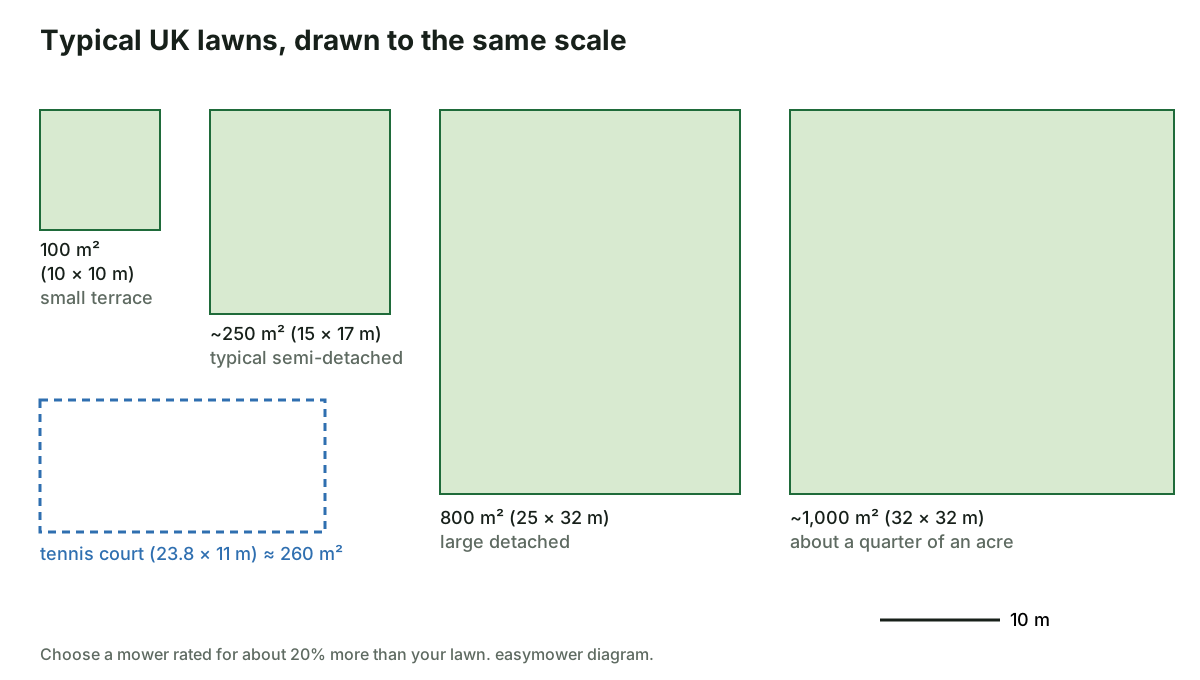
Measure your lawn rather than guessing: our lawn size tool works from a satellite map. A good rule is to choose a rated area comfortably larger than your lawn, around 20% more, so the mower isn't running flat out and has time to catch up after a wet week. Slopes, obstacles and lots of separate areas all reduce how much a mower can cover.
What a robot mower won't do
- Edges. Most can't cut right up to a wall or fence. Some claim full or partial edge cutting, but you'll still need a trimmer for some edges.
- Long grass and first cuts. Bring the lawn down with an ordinary mower first.
- Leaves and debris. They don't collect anything, so autumn leaves still need clearing.
- Very steep or rough ground. Check the slope rating; see robot mowers on slopes.
- Complicated gardens without effort. Several separate lawns, narrow passages and lots of beds are all possible, but they need the right mower and more setup. See our guide to complex gardens.
Where next
If you're still deciding whether a robot mower makes sense, read are robot mowers worth it? and how much a robot mower costs. When you're ready to narrow down models, our mower finder asks about your lawn size, slopes and layout, and our best-of pages cover small gardens, large gardens and slopes.
Frequently asked questions
Do robot mowers collect the clippings?
No. They cut a few millimetres at a time and leave the fine clippings on the lawn, where they break down quickly. That's why they need to run several times a week rather than once a fortnight.
Do robot mowers work in the rain?
Most are built to cope with rain and are left outside all season, but many have a rain sensor or a weather setting that sends them home when it's wet. Cutting wet grass gives a rougher finish and makes slopes more slippery, so pausing in heavy rain is usually sensible.
Can a robot mower cut long grass?
Not well. They're designed to maintain a lawn that is already short. Before the first run, cut the lawn with an ordinary mower, then set the robot's height a little higher and bring it down over a few weeks.
Are robot mowers safe around children and pets?
They use small blades on a disc under the body, and lift and tilt sensors stop the blades if the mower is picked up or tipped. Obstacle detection varies a lot between models, though, so the usual advice is not to run the mower while children or pets are playing on the lawn.
How does a robot mower know when to go home?
It monitors its battery and heads back to the charging station when it runs low or when its scheduled session ends. Wired mowers follow the boundary or a guide wire home; wire-free mowers navigate back using their map.
In this guide
Models mentioned in this guide
With today’s lowest UK price and our score.

Flymo EasiLife
- Up to 800 m²
- Perimeter wire
- 35% slopes

Ecovacs GOAT O RTK (O600 RTK / O800 RTK)
- Up to 800 m²
- RTK (own base station)
- 45% slopes

STIGA A v range (A 6v to A 25v)
- Up to 2,500 m²
- Network RTK
- 45% slopes

Dreame A1 Pro
- Up to 2,000 m²
- LiDAR
- 45% slopes

eufy Robot Lawn Mower E15
- Up to 800 m²
- Vision (camera)
- 32.5% slopes
 Mammotion
Mammotion LUBA 3 AWD
- Up to 5,000 m²
- Hybrid (RTK + vision/LiDAR)
- 80% slopes
Mower finder
Not sure which mower fits your garden?
Tell us your lawn size, slopes, trees and budget. The finder filters every current model down to the ones that fit, and explains why.
Measure your lawn on a map