Guide
Network RTK and 4G: signal, subscriptions and coverage in the UK
Network RTK mowers get their satellite corrections over the internet instead of from a base station in your garden, usually through a built-in 4G connection, sometimes through your Wi-Fi. That makes setup simpler, but it means coverage across the lawn matters and some models have data plans after a free period. Here's how to check your signal and what to look for in the small print.

What network RTK is
Satellite-guided robot mowers use RTK (real-time kinematic) positioning to know where they are to within a few centimetres. RTK needs a stream of correction data from a reference receiver at a known location. Traditionally that's a base station you mount in the garden. Network RTK replaces it with corrections sent over the internet from a network of permanent reference stations, so there's nothing to install except the charging station. Brands use different names for it, such as NetRTK, RTK Cloud, cloud RTK or RTKn.
National networks of reference stations already exist for surveying and mapping; in Great Britain, for example, Ordnance Survey runs OS Net. Mower makers generally don't say which correction service they use, so judge a model on the coverage it needs in your garden rather than on the network behind it.
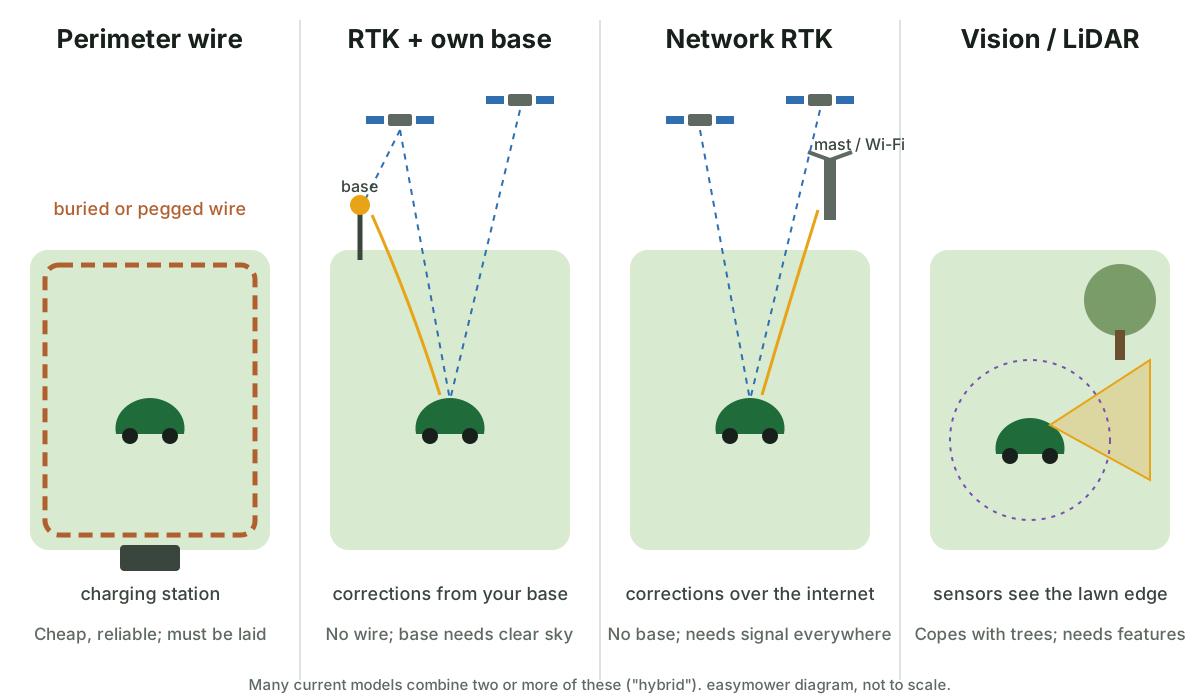
For a wider comparison with vision and LiDAR, read RTK vs vision vs LiDAR.
How the corrections reach the mower
There are three set-ups in the UK market:
- Built-in 4G. The mower has its own SIM and mobile connection. Most network RTK mowers work this way, including the Stiga A v range and the Navimow i2 AWD.
- Your Wi-Fi. Husqvarna's newer V-range Automowers, such as the Husqvarna Automower Aspire R6V, get their corrections over Wi-Fi, and Husqvarna says Wi-Fi needs to cover the whole lawn. A dealer-fitted cellular kit or a base station are the alternatives if it doesn't.
- Via the charging station or a hub. Some systems relay data through the charging station or a separate gateway rather than directly to the mower. Check the manufacturer's coverage requirements, because they differ.
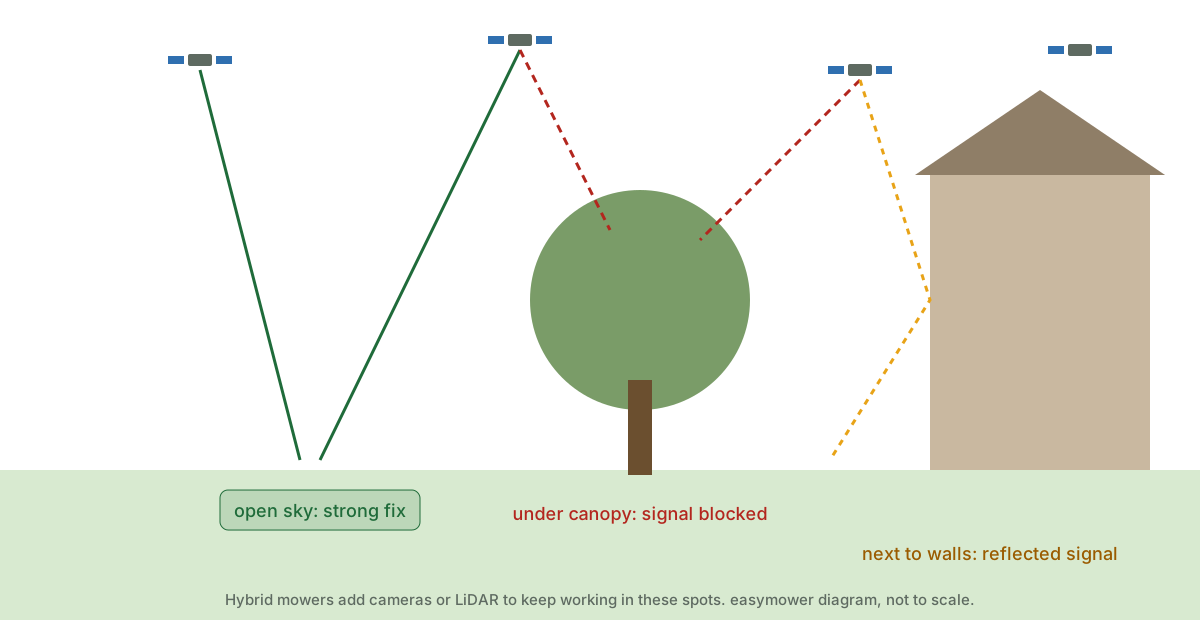
Whichever route, the mower still needs a good view of the sky for the satellite part. Network RTK removes the base station, not the need for open sky; trees and tall buildings affect it just as much.
Checking coverage in your garden
Mobile coverage in UK gardens varies more than you might think. Rural areas, valleys, houses with thick stone walls and the far end of long gardens can all be patchy. Before buying a 4G-dependent mower:
- Check the official maps. Ofcom's mobile coverage checker shows predicted outdoor 4G coverage by postcode for each network. Look at all the main networks, because you may not know which one the mower's SIM uses.
- Use the manufacturer's checker if there is one. Navimow, for example, offers a postcode checker on its UK site.
- Walk the lawn with your phone. Stand at the far corners and in shaded spots, and try loading a web page. It's not a perfect test, since your network may differ from the mower's, but a dead spot for your phone is a warning sign.
- For Wi-Fi-based systems, check your signal at the furthest edge of the lawn. An outdoor access point or a mesh node near a back door or window can extend it.
Correction data doesn't need much bandwidth, so you don't need fast speeds, but the connection should be steady. Remote features such as live camera view use more data.
What happens when the signal drops
Short gaps are normal and most mowers ride them out. Longer gaps mean the corrections go stale and positioning accuracy falls. What the mower does next depends on its design:
- RTK-only mowers typically slow down, pause or head home until the fix returns.
- Hybrids that also use cameras or LiDAR can keep going on those sensors for a while. Worx, Husqvarna and Mammotion all describe their hybrid systems as carrying on through weak satellite signal.
A connection can matter even when there's a base station in the garden. Stiga's first-generation A-series comes with its own reference station, yet Stiga says the mowers can't start without their 4G link, because the corrections are relayed through its cloud. So check coverage for any mower with built-in 4G, not just those sold as network RTK.
If part of your lawn has no coverage at all, a hybrid, a base station fallback, or a different navigation type is safer.
Subscriptions and data plans
This is where the small print matters. Three questions to ask about any 4G mower:
- How long is data included?
- Is a paid plan required to keep mowing, or only for remote features?
- Is the RTK correction service itself free for life?
Here's what manufacturers state for some current models:
- Mammotion YUKA mini 2: 36 months of data included; subscription required: No. Mammotion says its NetRTK service is free and 4G is optional after the included period.
- Navimow i2 AWD: 12 months included; subscription required: No.
- Stiga A v range: 120 months included; subscription required: No.
- Stiga A 4 and A 8 (older range with its own reference station): 24 months included; subscription required: Yes.
- Sunseeker X3 Gen 2: 24 months included; subscription required: Yes.
- Kress EyePilot RTKn: Kress says connectivity is included with no additional fees. It doesn't make the same statement on its older Mission RTKn pages.
Terms change, so check the manufacturer's current data terms before buying, and note the renewal price if there is one. You can add any subscription cost to our running-costs calculator to see the yearly total.
What 4G gives you besides corrections
Even where it isn't needed for mowing, 4G adds useful features: controlling the mower from anywhere, alerts if it's stuck, and GPS tracking if it's stolen. That last one is often the strongest argument for keeping a plan. See robot mower theft and security.
Older connected mowers and the 2G switch-off
Some older connected mowers use 2G mobile networks. The government says UK operators will switch off their 2G networks between 2029 and 2033. Bosch's manuals, for example, describe the cellular link in the discontinued Indego S+ and M+ as GSM (2G). If you're buying second-hand or a run-out model with a cellular module, check which network generation it uses; its remote features may stop working when 2G goes, even if the mower still mows.
If your signal isn't good enough
- Add a base station. Several brands sell an RTK base or reference station as a fallback. It needs mains power and a clear view of the sky; see RTK station accessories.
- Choose a hybrid that can navigate with cameras or LiDAR when the connection drops.
- Choose vision or LiDAR, which don't need a connection to navigate.
- Choose a wired mower. See perimeter wire vs wire-free.
| Model | Price from | Max lawn | Navigation | Max slope | Score |
|---|---|---|---|---|---|
 Kress Mission RTKn Kress Mission RTKn | £674.50 | 5,000 m² | Network RTK | 40% | 7.4 |
 Segway Navimow i2 AWD Segway Navimow i2 AWD | £799 | 1,000 m² | Network RTK | 45% | 7.3 |
 STIGA A v range (A 6v to A 25v) STIGA A v range (A 6v to A 25v) | £999 | 2,500 m² | Network RTK | 45% | 7.7 |
 GARDENA smart SILENO free GARDENA smart SILENO free | £1,299 | 1,200 m² | Network RTK | 35% | 7.4 |
 Husqvarna Automower 305E NERA Husqvarna Automower 305E NERA | £1,549 | 900 m² | Network RTK | 30% | 6.4 |
| Husqvarna Automower 310E NERA | £1,949 | 1,500 m² | Network RTK | 30% | 6.7 |
 Honda Miimo 1500i and 2200i Honda Miimo 1500i and 2200i | £2,075RRP | 2,200 m² | Network RTK | 47% | 6.7 |
| Husqvarna Automower 320 NERA | £2,499 | 3,300 m² | Network RTK | 50% | 7.2 |
For a shortlist based on your lawn and signal, use our mower finder, or browse all wire-free robot mowers.
Frequently asked questions
Do I need 4G for a network RTK mower?
The mower needs an internet connection to receive corrections. Most network RTK mowers have 4G built in; some, such as Husqvarna's newer V-range Automowers, use your home Wi-Fi instead and need it to reach the whole lawn. Check which method a model uses before you buy.
What happens when the free 4G data runs out?
It depends on the brand. Some say the mower keeps mowing and only remote features such as live tracking stop unless you pay for a plan. A few list a paid subscription as required after the included period. Read the manufacturer's data terms for the model you're considering.
My phone has one bar of 4G in the garden. Is that enough?
Possibly. Correction data is small, so a network RTK mower doesn't need fast speeds, but it does need a steady connection. The mower's network may not be the same as yours, so check more than one network on Ofcom's coverage checker and use the manufacturer's postcode or coverage checker if there is one.
Can I add a base station if my signal is poor?
Often, yes. Several brands sell an RTK base or reference station as a fallback for gardens with weak coverage. It needs mains power and a clear view of the sky.
Is network RTK more accurate than a base station?
Both aim for centimetre-level positioning. A base station in your garden is very close to the mower, which suits the RTK method well; network corrections come from reference stations further away. In practice, sky view in the garden usually matters more than which source the corrections come from.
In this guide
Models mentioned in this guide
With today’s lowest UK price and our score.
STIGA A v range (A 6v to A 25v)
- Up to 2,500 m²
- Network RTK
- 45% slopes
Segway Navimow i2 AWD
- Up to 1,000 m²
- Network RTK
- 45% slopes
Husqvarna Automower Aspire R6V
- Up to 600 m²
- Hybrid (RTK + vision/LiDAR)
- 40% slopes
Kress EyePilot RTKn
- Up to 10,000 m²
- Hybrid (RTK + vision/LiDAR)
- 40% slopes
 Mammotion
Mammotion YUKA mini 2
- Up to 1,000 m²
- Hybrid (RTK + vision/LiDAR)
- 45% slopes

Sunseeker X3
- Up to 800 m²
- Hybrid (RTK + vision/LiDAR)
- 30% slopes
Mower finder
Not sure which mower fits your garden?
Tell us your lawn size, slopes, trees and budget. The finder filters every current model down to the ones that fit, and explains why.
Measure your lawn on a map